
Many creators assume that repurposing the exact same vertical video across YouTube Shorts and TikTok will produce identical reach on both platforms. However, cross-posting without adjusting for platform mechanics frequently leads to high views on one platform and total stagnation on the other.
Both platforms feature full-screen vertical feeds, but their recommendation engines evaluate performance metrics through fundamentally different frameworks. Understanding these distinctions allows you to optimize your content for both algorithms.
Key Algorithmic Differences at a Glance
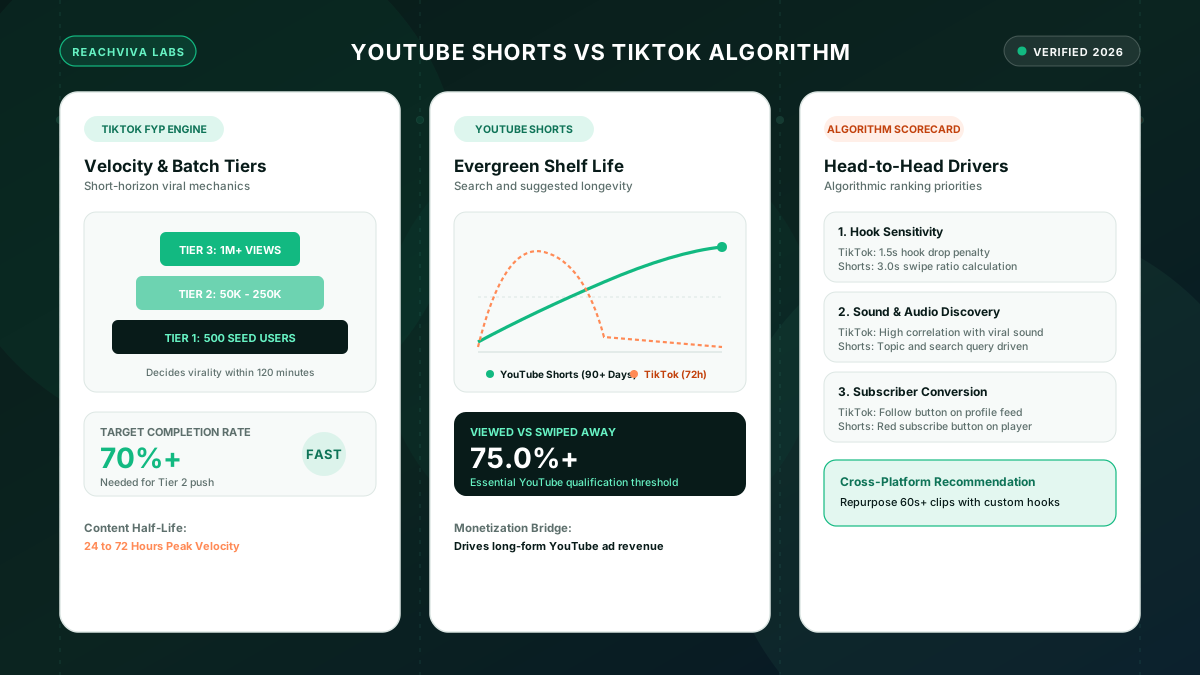
Factor: Primary Evaluation Gate; YouTube Shorts: Viewed vs. Swiped Away percentage; TikTok: 2-Second Retention & Completion rate
Factor: Pass Threshold; YouTube Shorts: 70%+ Viewed ratio; TikTok: 65%+ retention past second 2
Factor: Content Shelf Life; YouTube Shorts: Months to years (search-backed); TikTok: 24 to 72 hours (velocity-backed)
Factor: Discovery Channels; YouTube Shorts: Shorts Feed, Search, Related Videos; TikTok: For You Page, Audio Search
Factor: Subscriber / Follower Impact; YouTube Shorts: Strong long-term subscriber equity; TikTok: Low follower-to-view correlation
Factor: Long-Form Ecosystem Integration; YouTube Shorts: Direct bridge to high-CPM long videos; TikTok: Isolated standalone video ecosystem
1. The Critical Metric: "Viewed vs. Swiped Away"
On YouTube Shorts, analytics include a specific metric that TikTok does not display publicly: the Viewed vs. Swiped Away percentage.
When a user scrolls through the Shorts player, YouTube counts every time your video appears on screen as an impression. If the user swipes past before two seconds, it registers as "Swiped Away."
- If your Viewed ratio is under 65%, YouTube halts distribution almost immediately, regardless of how good the rest of your video is.
- If your Viewed ratio is above 75%, the video typically enters the secondary recommendation pool.
On TikTok, by contrast, initial seed tests tolerate slightly higher immediate scroll-throughs provided that the viewers who stay watch the video repeatedly and generate comments.
2. Content Shelf Life: Evergreen Search vs. Immediate Velocity
The most significant operational advantage of YouTube Shorts is longevity:
- TikTok Shelf Life: A TikTok video typically captures 85% of its lifetime views within the first 48 to 72 hours. While "slow-burn" viral videos happen, most content decays quickly once it exits the FYP testing cycle.
- YouTube Shorts Shelf Life: YouTube is the world's second-largest search engine. A Short addressing a clear question (such as "how to fix audio latency in premiere") can gather modest views in week one, but continue accumulating thousands of views every month for two years as users search for solutions.
3. Audience Ecosystem and Conversion
On TikTok, follower count correlates loosely with daily view volume; accounts with 500,000 followers regularly publish videos that gather only 2,000 views if the content fails algorithmic seed tests.
On YouTube, subscribers acquired through Shorts carry compounding value:
- Shorts can feature a native clickable link directing viewers to a related long-form video on your channel.
- Converting Shorts viewers into long-form subscribers provides access to YouTube's higher AdSense RPM rates, which frequently reach $4.00 to $12.00 per thousand views compared to short-form ad shares.
Best Practice Recommendations
To win on both platforms simultaneously:
- For TikTok: Optimize for immediate conversational hooks, trending sound synchronization, and direct comments.
- For YouTube Shorts: Optimize the opening frame for a 75%+ Viewed ratio, title the video using natural search phrases, and link directly to a related long-form video in the Shorts editor.
Use a sustainable content strategy, and compare a one-time visibility package only if its scope, price, requirements, and refund terms fit your campaign.