
Artificial intelligence has permanently altered the economics of digital content creation. However, the initial wave of generic AI tools that generated bland, robotic blog posts and synthetic avatars has largely failed to build authentic audience trust. In 2026, successful creators do not use AI to replace their personal voice; they use specialized AI utilities to eliminate repetitive operational friction.
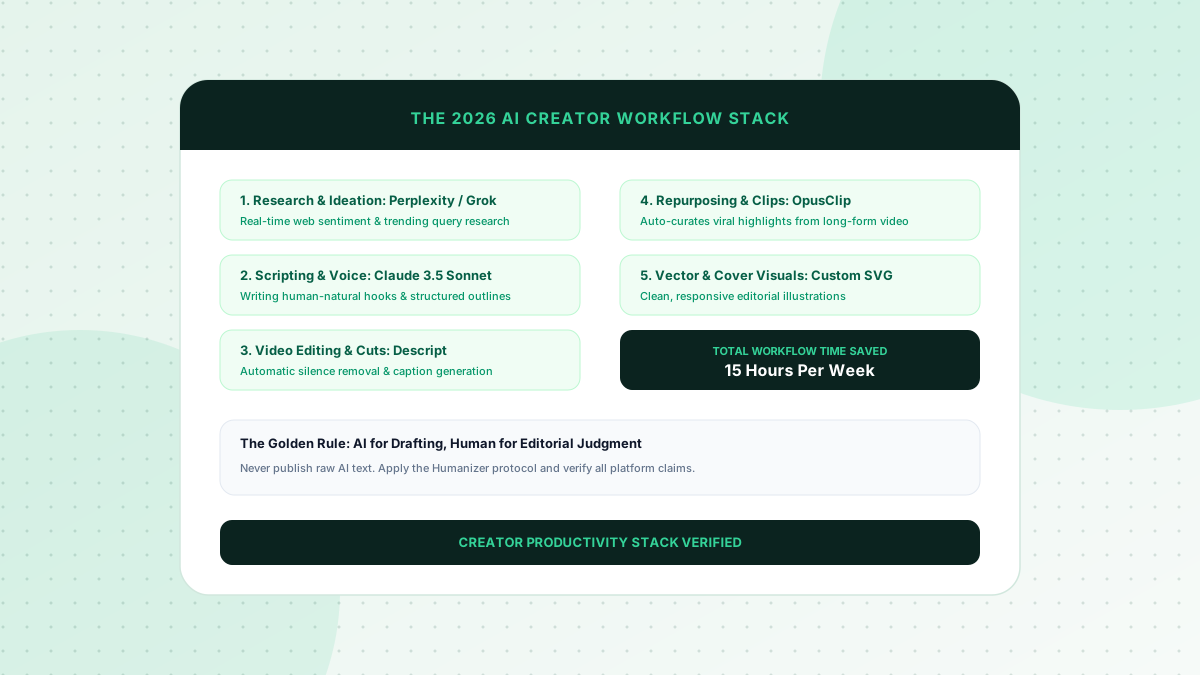
By assembling an integrated AI creator workflow, an individual operator can maintain the production output of a full media agency while saving 15 to 20 hours each week. Here are the 5 foundational AI tools powering top creator workflows in 2026.
1. Deep Research & Sentiment Analysis: Perplexity Pro
Starting content from a blank page is the primary cause of creator burnout. Perplexity functions as an AI-powered conversational search engine with live internet access:
- Creator Use Case: Query real-time platform discussions: "What are the most common complaints creators have about the Instagram algorithm update this month?"
- Output: Returns synthesized summaries with direct citations to Reddit threads, platform announcements, and creator forums, providing immediate content inspiration.
2. Voice-Preserving Scripting & Drafting: Claude 3.5 Sonnet
While many language models produce generic marketing clichés, Claude 3.5 Sonnet excels at adhering to strict writer DNA guidelines and nuanced human voices:
- Creator Use Case: Feed Claude your established voice profile, article outlines, and specific negative rules (e.g., "Never use exclamation marks or hype words like game-changer").
- Output: Rapidly drafts structured video scripts, thread hooks, and conversational captions that match your natural speaking cadence without sounding synthetic.
3. Text-Based Video Editing: Descript
Traditional timeline video editing requires scrubbing through hours of footage to slice pauses and errors. Descript converts video editing into editing a text document:
- Creator Use Case: The AI automatically transcribes your video. Deleting a word or sentence in the text transcript cuts the corresponding video frames instantly.
- Core Feature: Automatically detects and removes filler words ("um", "uh", "like") and eliminates silent pauses longer than 0.3 seconds across all clips in a single click.
4. Multi-Platform Video Repurposing: OpusClip
Turning long-form YouTube videos or podcasts into vertical short-form clips used to require manual clipping and framing. OpusClip automates the repurposing pipeline:
- Creator Use Case: Drop in a 20-minute video link. The AI analyzes hook strength, watch velocity potential, and narrative coherence, extracting 5 to 10 ready-to-publish vertical clips.
- Features: Auto-reframes active speakers into 9:16 vertical view, generates animated dynamic captions, and assigns each clip a viral likelihood score.
5. Visual Vector Editorial Illustration: Custom Clean SVG Automation
Generic stock photography cheapens brand credibility, while hiring illustrators for every post is cost-prohibitive. Automated vector generation engines create clean, responsive SVG diagrams and editorial covers:
- Creator Use Case: Programmatic generation of branded cover art featuring clean geometric device mockups, data curves, and metric badges that never pixelate.
The Core Rule: AI for Speed, Human for Judgment
To protect your brand reputation and audience trust, enforce this non-negotiable operational boundary:
- Never publish raw, unedited AI output.
- Always apply an editorial audit pass to verify statistics, eliminate cliché transitional phrases, and inject genuine firsthand practitioner perspective.
Integrating these specialized utilities allows you to scale high-value distribution without sacrificing creative authenticity.
Use a sustainable content strategy, and compare a one-time visibility package only if its scope, price, requirements, and refund terms fit your campaign.