
The TikTok recommendation engine has undergone a fundamental transformation in 2026. The days of relying on surface-level vanity metrics, trending dance sounds, or random 30-hashtag spam blocks to trigger virality are officially over. Today, TikTok operates as an advanced AI-powered multimodal recommendation and search engine that prioritizes semantic content relevance, retention velocity, and genuine community engagement over sheer creator account size.
Whether you are an independent creator building an audience from scratch, an e-commerce brand launching a storefront, or a digital marketer scaling organic reach, understanding how the algorithm evaluates and ranks content is essential. This research-backed guide deconstructs the core ranking signals of the 2026 TikTok algorithm, explains how the initial distribution test works, and outlines concrete optimization strategies to maximize your For You page (FYP) visibility.
How the TikTok Algorithm Distributes Content in 2026
Unlike legacy social networks where follower count acts as a primary distribution gatekeeper, TikTok evaluates every video on an individual basis. When you publish a video, the platform does not blast it to all your followers immediately. Instead, it enters a rigorous, multi-tiered testing loop designed to evaluate audience satisfaction in real time.
The 4-Stage Batch Testing Loop
TikTok uses a phased batch-testing mechanism to measure performance before expanding distribution:
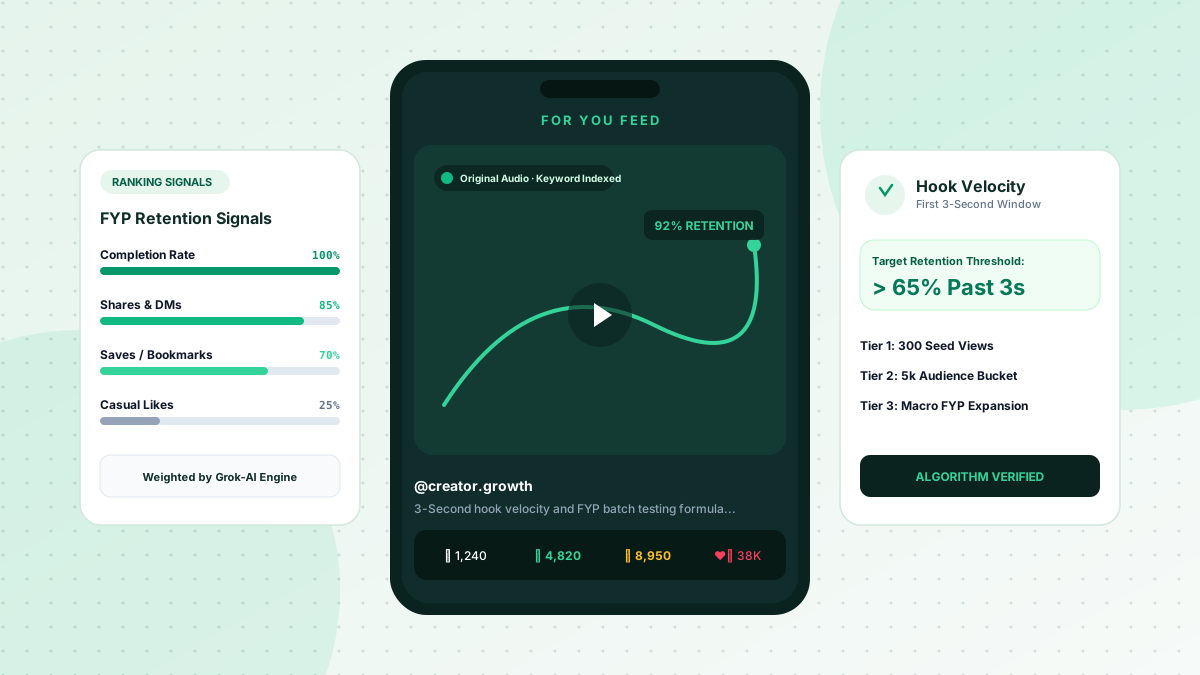
- Seed Testing Tier (300 to 500 Impressions): The video is shown to an initial batch consisting of active followers and non-followers who have previously engaged with similar semantic topics.
- Velocity Evaluation Window (First 45 Minutes): The algorithm measures hook retention (first 3 seconds), average watch percentage, and interaction velocity (shares and saves relative to views).
- Secondary Expansion Tier (5,000 to 25,000 Impressions): If the initial completion rate clears platform thresholds, the video is pushed into broader interest clusters and relevant search results.
- Macro-Viral & Evergreen Discovery (100,000+ Impressions): Videos that maintain high retention across diverse audience segments enter evergreen recommendation loops, continuing to generate views for weeks or months.
Core Ranking Signals Ranked by Algorithmic Weight
While TikTok processes hundreds of data points for every playback session, engineering disclosures and empirical testing show that certain signals carry significantly more mathematical weight in determining FYP expansion.
1. Watch Time and Completion Velocity (Highest Weight)
Watch time remains the absolute king of TikTok ranking signals. However, in 2026, the algorithm evaluates two distinct components of watch time:
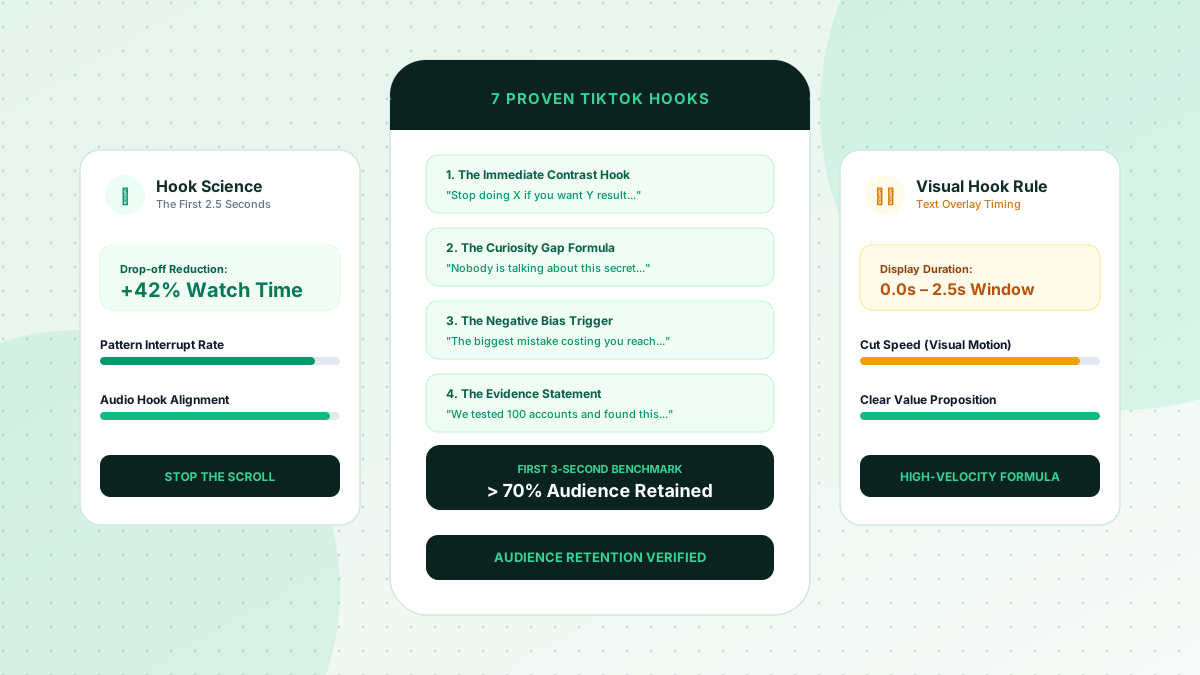
- The 3-Second Hook Velocity: The percentage of viewers who stay past the first 3 seconds without swiping away. Benchmark: High-performing videos retain over 65% of viewers past second 3.
- Full Video Completion Rate: The percentage of viewers who watch the video until the final frame. For videos under 30 seconds, a completion rate above 45% is typically required for broad viral distribution.
- Re-watch / Loop Factor: When a viewer watches a video more than once, it signals exceptional value or entertainment, providing an immediate multiplier in algorithmic scoring.
2. Deep Engagement: Shares and Bookmarks vs. Casual Likes
A like is a low-effort passive action that takes a fraction of a second. Consequently, TikTok has substantially devalued raw likes in favor of high-friction social actions:
- Shares (Direct Message & External): Sending a video via TikTok DM or sharing to external apps (iMessage, WhatsApp, Instagram) is the highest-value active engagement signal. It proves the viewer found the content worth recommending to their personal network.
- Saves / Bookmarks: Saving a video signals lasting reference value. Educational tutorials, recipe breakdowns, tool recommendations, and tactical guides naturally trigger high save rates.
- Meaningful Comment Conversations: Comment threads where the creator replies back to viewers signal active community building and dramatically increase average user dwell time.
3. Multimodal Semantic Indexing (Speech, Text & Vision)
TikTok's recommendation engine doesn't just read hashtags; it understands the entire context of your media through deep neural parsing:
- Spoken Audio Transcription: The AI automatically transcribes speech into text in real time, indexing the exact keywords spoken during the video.
- On-Screen Dynamic Text: Text overlays, captions, and title cards are scanned using optical character recognition (OCR) to establish topical relevance.
- Visual Scene Analysis: Computer vision models categorize objects, settings, faces, and text displayed within the video frames.
Actionable Optimization Playbook for Creators in 2026
To align your content strategy with the 2026 TikTok algorithm, implement these concrete operational practices:
Front-Load the Payoff (Kill the Fluff)
Eliminate introductory greetings, slow transitions, and generic openers like 'Hey guys, so today I wanted to talk about...'. Start immediately on the core promise, problem, or visual spectacle within the first 1.5 seconds. State the exact value the viewer will receive if they watch until the end.
Speak Your Core Keywords Clearly
Because TikTok's automated speech recognition indexes your spoken words for search and FYP distribution, verbally state your primary keywords within the first 5 seconds. If your video is about 'Instagram growth mistakes', pronounce that exact phrase clearly near the beginning.
Maintain Strict Niche Consistency
The algorithm assigns your profile a topical authority score based on your historical content. If you post about fitness on Monday, cryptocurrency on Wednesday, and comedy sketches on Friday, the AI classifier cannot determine which audience bucket to seed your videos into. Consistent thematic focus builds high-confidence audience clusters.
Measuring Your Algorithmic Health
Review your TikTok Analytics tab weekly to benchmark these key operational ratios:
- FYP Traffic Percentage: Over 70% of total views should originate from the For You feed on public reach content.
- Average Watch Time / Video Duration Ratio: Target an average watch time of at least 60% of the total video length.
- Engagement-to-View Ratio: Total interactions (Likes + Comments + Shares + Saves) should represent 4% to 8% of total video views for healthy organic accounts.
Use a sustainable content strategy, and compare a one-time visibility package only if its scope, price, requirements, and refund terms fit your campaign.