
The internet is filled with superficial advice on how to go viral on TikTok, usually recommending that you use trending sounds or post five times a day. While trending audio helps, relying on audio alone does not produce sustainable reach. In 2026, TikTok operates as an advanced machine-learning distribution network governed by empirical thresholds.
When a video achieves millions of views, it does so because it passed a sequence of tiered audience evaluations without dropping below minimum retention benchmarks.
The Algorithmic Tier Hierarchy
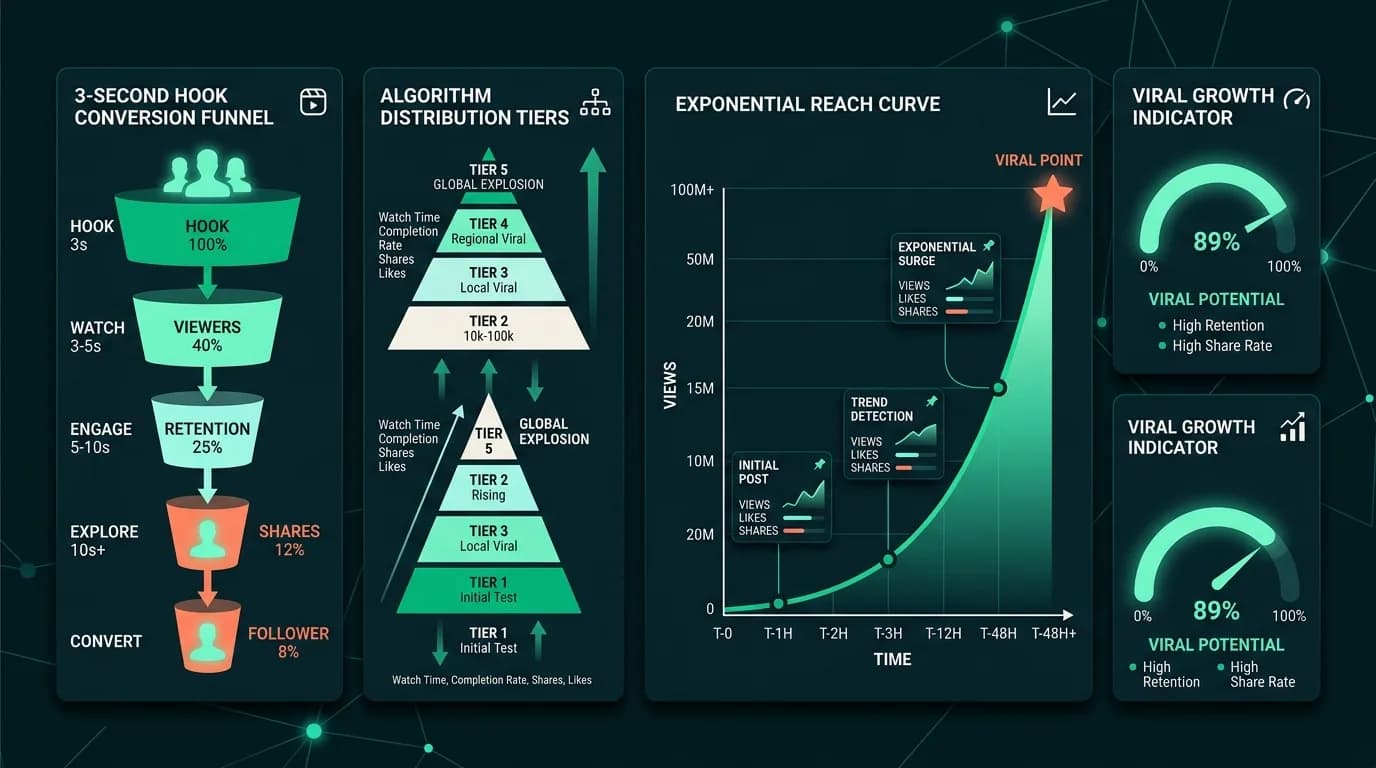
Every video uploaded to TikTok progresses through four evaluation stages:
Tier Level: Tier 1: Initial Seed; Typical View Count: 200 – 500 views; Primary Metric Evaluated: 2-Second Retention & Hook Drop; Pass Threshold: 65%+ stay past second 2
Tier Level: Tier 2: Broad Audience; Typical View Count: 1,000 – 10,000 views; Primary Metric Evaluated: Completion Rate & Average Watch Duration; Pass Threshold: 60%+ completion (<15s)
Tier Level: Tier 3: Niche Viral; Typical View Count: 50,000 – 250,000 views; Primary Metric Evaluated: Shares, Saves & Comment Volume; Pass Threshold: 1 share per 80 views
Tier Level: Tier 4: Global FYP; Typical View Count: 500,000+ views; Primary Metric Evaluated: Cross-demographic engagement velocity; Pass Threshold: Consistent completion across non-core users
If your video fails to clear Tier 1, it never enters Tier 2. The solution is diagnosing where your retention curve collapses.
Engineering the First 3 Seconds: The Visual Anchor
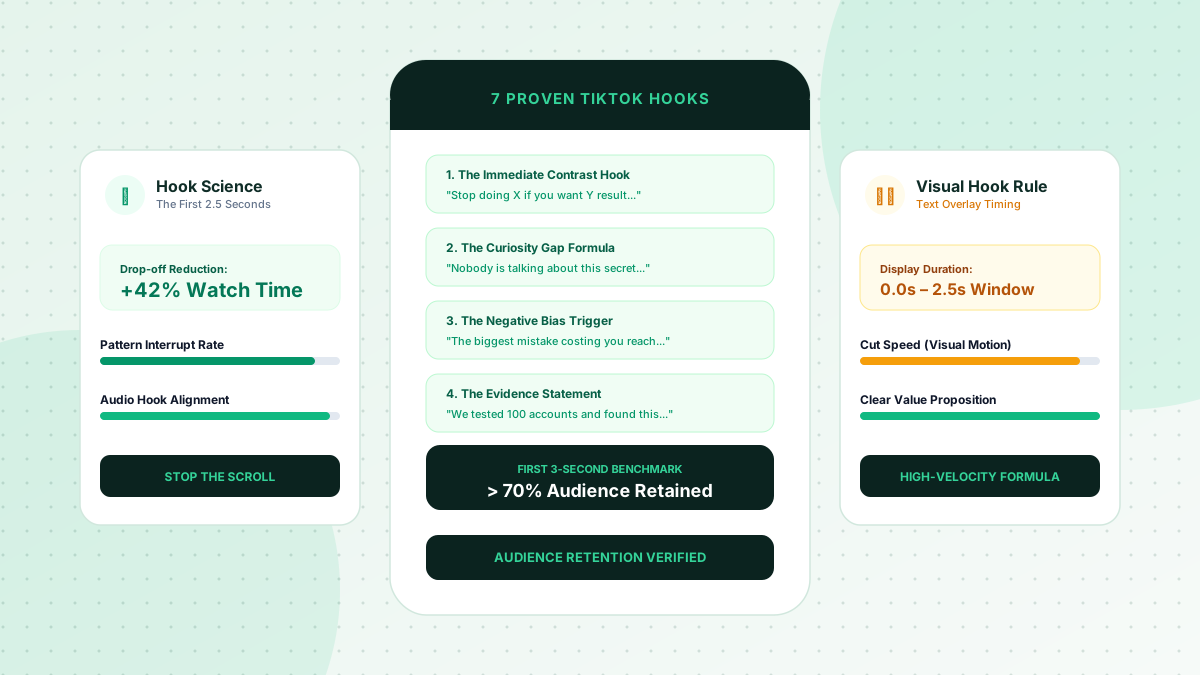
Viewers make a subconscious decision to scroll past or keep watching within the first 1.8 seconds. An effective hook requires two simultaneous components:
- The Verbal Proposition: State the payoff clearly. Do not use suspenseful vagueness like "You will never believe what happened." State the concrete event: "Here is why our three-month marketing campaign failed in 48 hours."
- The Visual Pattern Interrupt: Disrupt the visual rhythm of the feed. If most videos in your niche feature a talking head in front of a flat wall, open your clip while walking through a doorway, holding a detailed object close to the lens, or cutting between two contrasting angles.
Pacing and Micro-Cuts
Once a viewer stays past second three, your objective shifts to preventing mid-video drop-off. Examine your video editing timeline:
- Cut Every Breath: Remove pauses longer than 0.3 seconds between spoken thoughts.
- Introduce Visual Changes Every 3 to 4 Seconds: Switch between wide and close-up crops, insert B-roll cutaways, or display on-screen text callouts.
- Maintain Open Information Loops: Promise a specific resolution early in the video and withhold the final conclusion until the final five seconds.
The Power of the Share Metric
While likes are common, shares are rare and heavily weighted. TikTok promotes videos that generate external distribution because off-platform shares bring inactive users back into the app.
Ask yourself before publishing: Why would someone send this to another person?
- Validation: Does this video articulate a feeling or opinion your viewer holds but hasn't expressed?
- Utility: Does this provide a specific resource, tool, or tutorial that solves a real problem?
- Humor: Does this contain an observational insight someone would share with a coworker or friend?
If your video does not clearly trigger one of those three sharing motivations, edit the script before filming.
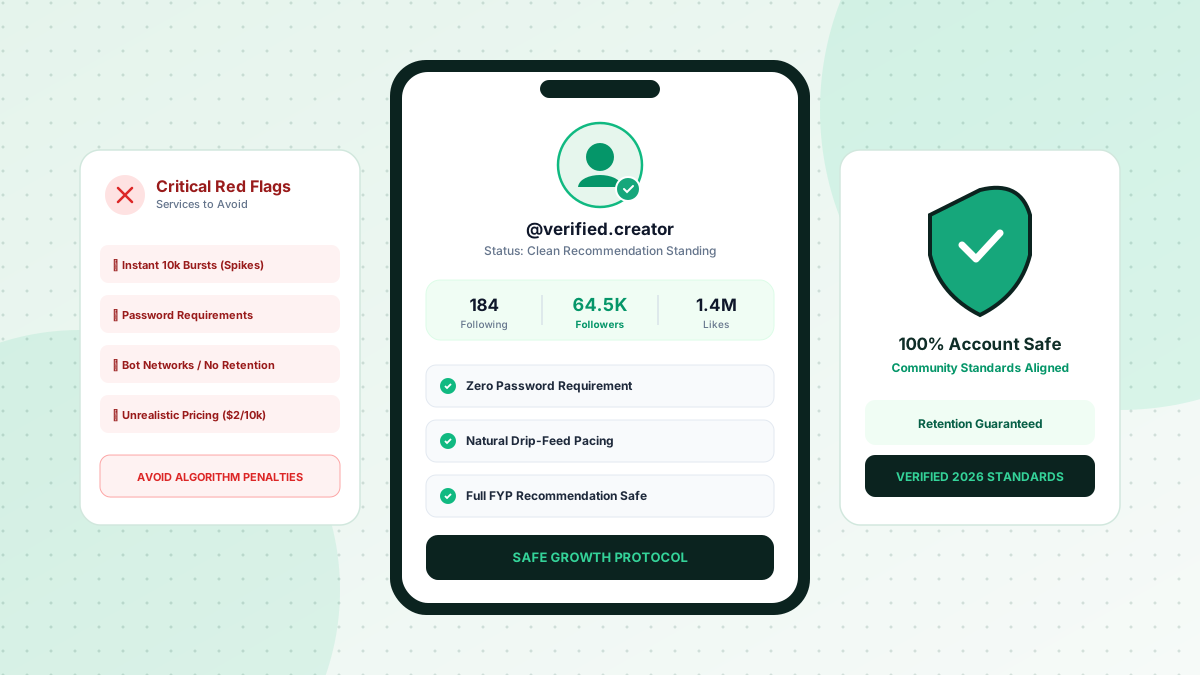
Use a sustainable content strategy, and compare a one-time visibility package only if its scope, price, requirements, and refund terms fit your campaign.