
Finding the ideal posting window on Instagram often feels frustrating because conflicting studies cite completely different hours. One agency suggests posting at dawn, while another claims late evenings yield the highest reach. The reason for this discrepancy is simple: universal posting charts ignore audience geography and the specific algorithmic distribution cycle of each content format.
To maximize your initial reach and avoid publishing into a dormant feed, you need to understand how Instagram schedules content distribution across your followers' active hours.
Universal Engagement Windows Across Time Zones
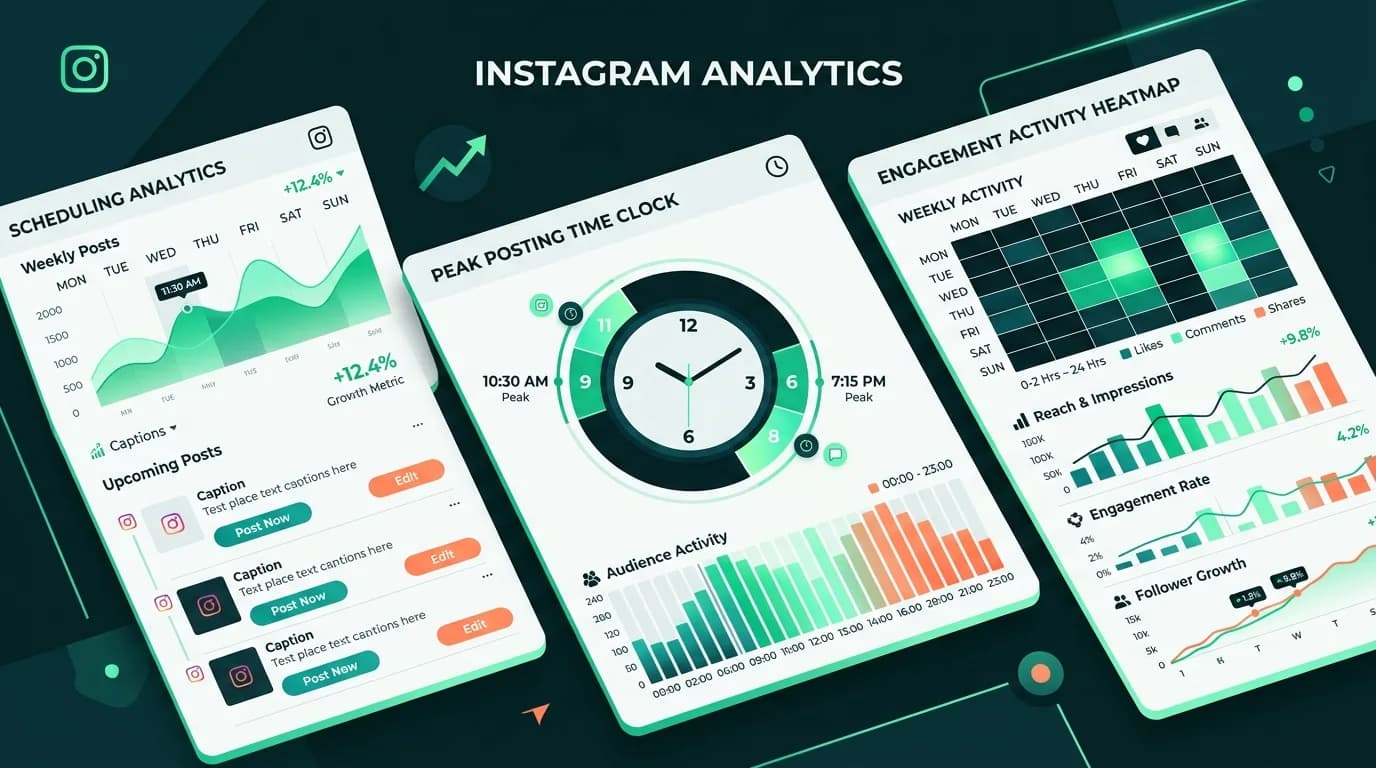
While audience demographics vary, user behavior across major metropolitan hubs forms consistent activity clusters throughout the work week. When evaluated in your primary audience's local time zone, three daily windows produce the strongest initial interactions:
Time Window: 7:00 AM – 9:00 AM; Activity Phase: Morning commute / Wake-up; Best Format to Publish: Single Images & Quick Reels; Audience Context: Casual browsing before work starts
Time Window: 12:00 PM – 2:00 PM; Activity Phase: Midday lunch break; Best Format to Publish: Dense Carousels & Tutorials; Audience Context: Extended dwell time and saving posts
Time Window: 6:30 PM – 9:00 PM; Activity Phase: Evening downtime; Best Format to Publish: Entertaining Reels & Stories; Audience Context: Highest overall session duration
Weekdays generally outperform weekends for B2B accounts and educational creators, with Tuesday, Wednesday, and Thursday showing the most reliable engagement consistency. For lifestyle, food, and entertainment profiles, Saturday mornings between 9:00 AM and 11:00 AM often match weekday lunchtime numbers.
Format Matters: Reels vs. Carousels vs. Stories
A common operational error is publishing every piece of content at the exact same hour. Different formats move through the algorithm at distinct velocities:
1. Instagram Reels (Publish 45 Minutes Before Peak)
Reels do not reach the majority of your viewers instantly. The recommendation engine tests new video uploads with an initial evaluation batch of followers and non-followers before expanding distribution. Publishing a Reel roughly 30 to 45 minutes before peak activity gives the system time to clear initial retention checks so your video is circulating widely right as user volume hits its highest point.
2. Multi-Slide Carousels (Publish During High-Dwell Hours)
Carousels require active scrolling and reading. Publishing them during lunch hours (12:00 PM to 1:30 PM) or early evenings (7:00 PM to 8:30 PM) matches periods when users have the leisure to swipe through eight to ten slides. If you post a dense educational carousel during the morning rush, users frequently scroll past without saving.
3. Stories (Spread Throughout the Day)
Do not post all your daily Stories in a single batch. Publishing three to five updates spread across morning, afternoon, and evening continuously bumps your profile bubble to the front of your followers' Story tray.
How to Find Your Account's Custom Peak Window
Relying solely on industry averages is a baseline strategy. To identify your exact custom posting hours:
- Open your Instagram Professional Dashboard and navigate to Insights > Total Followers.
- Scroll to the bottom to view the Most Active Times chart.
- Switch the toggle between Hours and Days to identify the 3-hour cluster with the tallest bar.
- Check the Top Locations section directly above to verify which cities and countries represent your majority audience. If 40% of your followers live on the East Coast and you reside in London, your schedule must align with Eastern Standard Time.
Schedule your high-effort posts approximately 30 minutes ahead of that peak window for two consecutive weeks and compare average non-follower reach in your post analytics.
Use a sustainable content strategy, and compare a one-time visibility package only if its scope, price, requirements, and refund terms fit your campaign.